A balance between theory and practice
The Bachelor's degree program in Sustainable Agriculture and Food Systems at the University of Hohenheim focuses on combining theoretical knowledge with practical application. In addition to sound scientific methods and academic content, you'll learn how to apply your knowledge in a targeted manner in professional contexts. The Bachelor's degree program is structured so that research and practical experience complement each other effectively throughout your studies.
Gaining practical experience
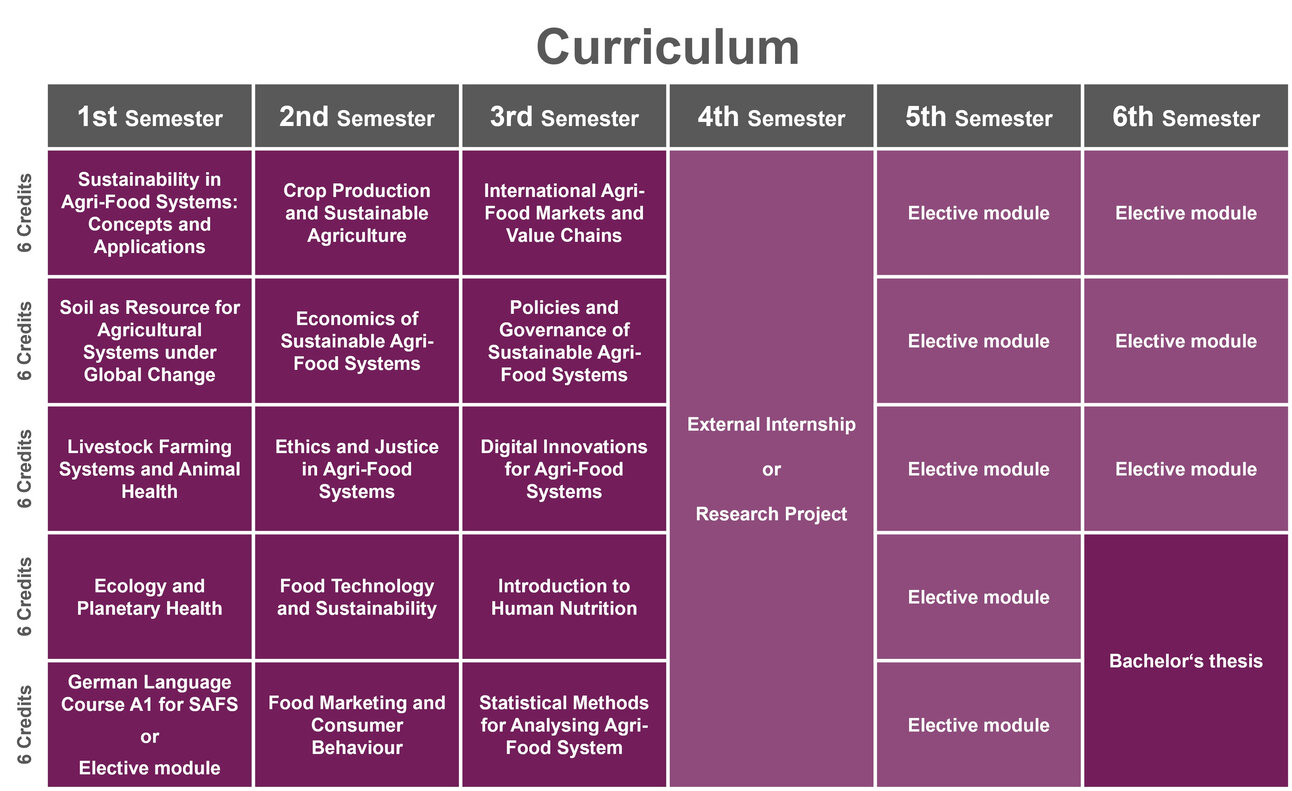
Practical experience is a key component of your studies and an important investment in your future. This gives you early insights into various career paths, such as in sustainable agriculture, the food industry, NGO work, politics, or research. The opportunity to undertake a practical semester is an integral part of the Bachelor’s degree program. You can complete this internship flexibly in Germany or abroad. For an internship in Germany, you already need to have stellar German language skills. To ensure you’re fully prepared, the University of Hohenheim offers comprehensive support: from internship recommendations and application coaching to assistance with organizational questions.
Skills for your future
In addition to academic excellence, the focus is on your professional competence. You can enhance your profile with practical, additional qualifications, such as:
- Trainer qualification in the field of “Education and Human Resources Management”
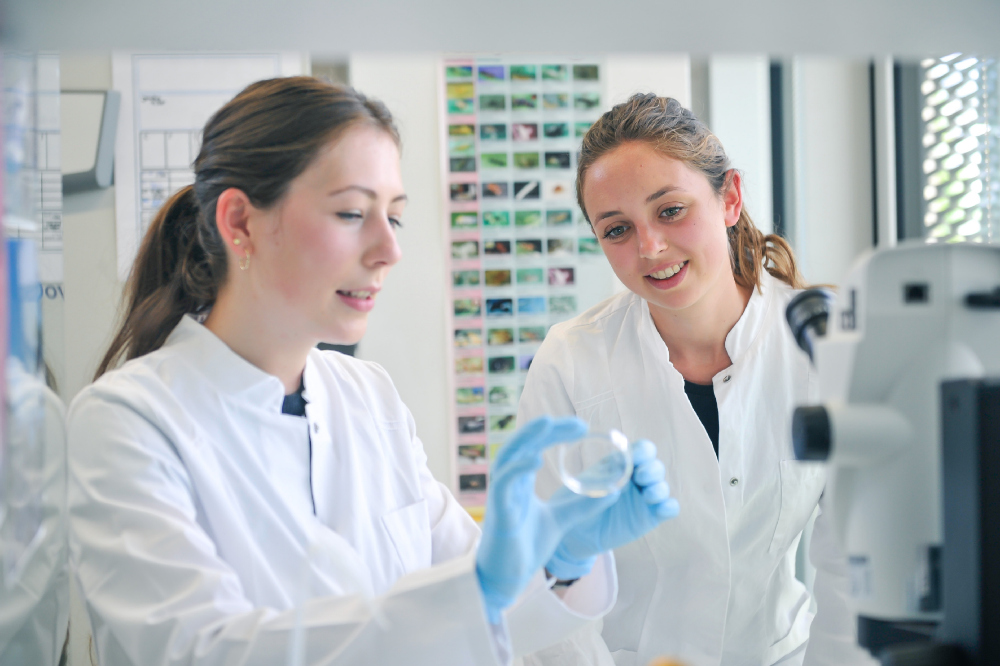
- Certificates in laboratory and quality management
- Training on plant protection or animal transport
This is supplemented by university-wide training sessions on personal, social, and methodological skills. In this way, you are optimally prepared to assume responsibility at the start of your working life.
Practical elements for students
Continuing education program F.I.T.
Learning from real-world experience
The University of Hohenheim maintains close ties with companies, farms, food corporations, NGOs, and research institutions in Germany and around the world. Events featuring international experts are held regularly, ranging from sustainable operations managers and food policy experts to innovators in agricultural technology and social entrepreneurs. You'll visit our Agricultural Research Stations, take part in excursions, and gain firsthand insights into fields, laboratories, and production processes – for example, at organic farms, food processing facilities, cooperatives, or innovative food companies.
Challenge-based learning: Learning through real-world problems
One specialization of the Bachelor's degree program is Challenge-Based Learning (CBL). Together with your fellow students, you'll develop solutions to real-world challenges. To do so, you'll work directly with companies, NGOs, and local initiatives. Possible projects include, for example:
- Reducing Food Waste in Regional Supply Systems
- Development of Climate Adaptation Strategies for Agricultural Cooperatives
- Designing Sustainable Supply Chains for Food Companies
This project-based learning approach helps you better understand complex interrelationships and specifically prepares you for leadership roles in a changing world.
Language and intercultural skills
To help you get started with your studies, daily life, and career, German language training is integrated into the Bachelor’s degree program. What is more, the university Language Center offers language courses. Good German language skills will help you integrate more easily and are an important prerequisite for career opportunities in Germany’s leading agriculture and food industry. Even though German isn't an admission requirement, knowing the language gives you a clear advantage when it comes to internships and building your professional network.
Language Center
Innovation and entrepreneurship: Innovation Greenhouse
The Innovation Greenhouse helps you bring your own ideas in the field of sustainable business to life, from the initial concept through development to launching your company. Whether it's regenerative agriculture, food waste solutions, agricultural technology, or sustainable logistics systems: Here, you'll find mentoring, resources, and contacts to help you turn your vision into reality or get involved with startups.
Innovation Greenhouse
Research during your studies
If you want to combine science and practice, research projects offer you ideal opportunities to test your own ideas and tackle real-world problems. With approximately 700 hectares of experimental land, the University of Hohenheim has the largest university research surface area in Germany. In addition, experimental farms with crop and livestock operations are available to you, where you can conduct your own experiments and carry out hands-on research.
Our Agricultural Research Stations
As part of projects such as “Humboldt Reloaded,” you’ll go through the entire research process—from literature review to method selection and data collection, all the way through to analysis and presentation.
Possible research questions include, for example:
- How do different tillage systems affect carbon storage in the soil?
- What factors influence consumers' acceptance of alternative protein sources?
- How can precision agriculture improve resource efficiency on small-scale farms?
Humboldt Reloaded